
At the Atlantis Blue Project Foundation (ABPF), we believe that the most effective conservation starts on the ground. By sponsoring organizations like Saving the Blue, we aren't just funding research; we are investing in the next generation of Bahamian marine scientists and the local communities that protect our coastlines.
The Work: Hands-On Conservation
Through our ongoing work with our sponsored partners at Saving the Blue, we recently completed a multi-day survey across Andros Island. Because sawfish are notoriously shy, we utilized environmental DNA (eDNA) sampling—a cutting-edge method that detects genetic traces left behind in the water. This allows ABPF-funded researchers to confirm the presence of sawfish even when they remain out of sight.
The mission also focused on immediate environmental health. The Saving the Blue team conducted beach cleanups, removing harmful nets and plastics from the shoreline to protect the habitats like coral reefs, seagrass beds, and coastal mangroves. To round out the week, we visited local schools to deliver holiday gifts and share the importance of our research with the children of Andros, bridging the gap between science and the community.
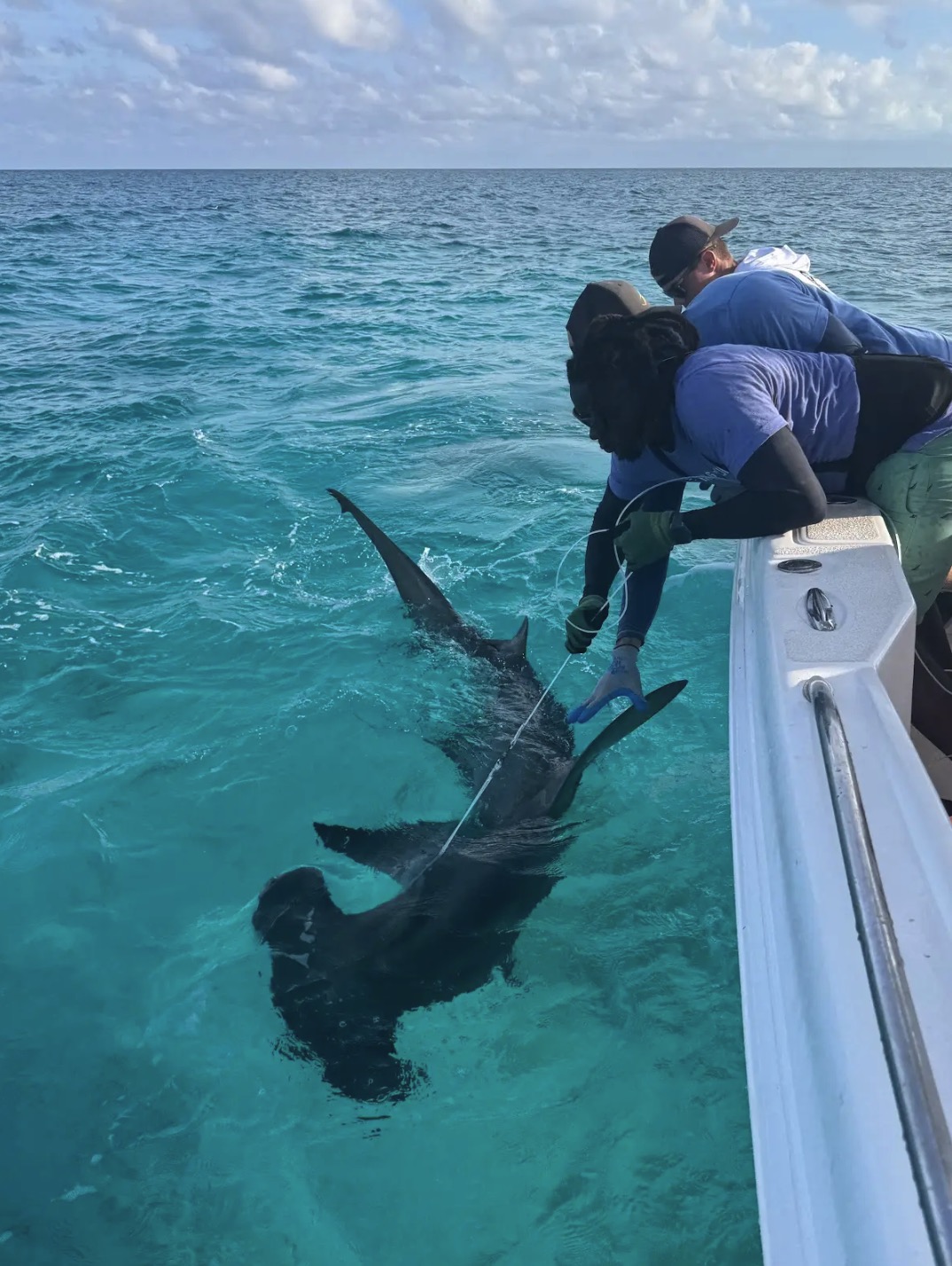
Releasing a great hammerhead post-workup (photograph by Gabby Lozada).
Impact Highlights: Beyond the Research
Student Mentorship: Provided University of The Bahamas students with professional field experience in satellite and acoustic tagging.
Habitat Restoration: Conducted shoreline cleanups, removing hazardous fishing gear and plastics from vital marine nurseries.
Community Engagement: Strengthened ties with local captains and schools through educational outreach and holiday support.
Species Diversity: Documented and tagged five different shark species, including a record-breaking 3-meter Tiger Shark.
Our Forward-Looking Commitment
ABPF is proud to stand behind the researchers, students, and community members who make this work possible.
FAQ
How can I start a career in marine science? A career in marine science usually begins with a degree in biology or environmental science, followed by hands-on internships and field experience.
Why is shark tagging important? Tagging allows researchers to track shark movement, growth, and habitat use, which is essential for creating effective marine protected areas.
How can I help protect the oceans in The Bahamas? You can help by participating in local beach cleanups, supporting organizations like ABPF, and following sustainable fishing practices.
How does the Atlantis Blue Project Foundation support local students? ABPF supports students by funding field opportunities, research grants, and mentorship programs with world-class marine scientists.