
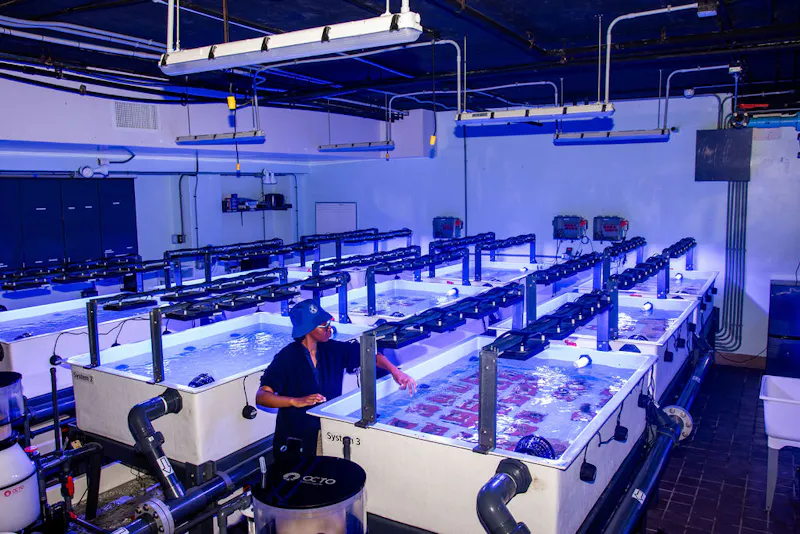
In the sterile, blue-lit confines of a holding tank, the stakes for coral health skyrocket. Without the natural "cleaning crew" of the open ocean (crabs, snails, and grazing fish), pests that are minor nuisances in the wild quickly turn into full-blown infestations. In this closed system, algae is a constant, opportunistic foe. With high-intensity LEDs and concentrated nutrients, a small patch of hair algae can transform from a green speck into a suffocating forest that outcompetes a coral fragment for light and oxygen in a matter of days.
The internal threats are even more insidious in a captive environment. Burrowing sponges and worms often arrive as hitchhikers, hidden deep within the "live rock" or the coral's own base. In a tank, their bio-erosion is accelerated, and without the massive calcium carbonate reserves of a natural reef, they can compromise an entire coral colony. Nudibranchs, meanwhile, become the ultimate nightmare for a reef keeper. These "zoanthid-eaters" can go undetected for weeks, their eggs resistant to many standard chemical dips. Once they hatch, the lack of predators allows them to feast undisturbed, turning a prized mother colony into a lifeless skeleton overnight.
The battle against hitchhikers begins with a chemical baptism. Every new arrival is submerged in a swirling cocktail of coral pest removal dips, a process designed to send pests into a frantic exodus. Within seconds, the water is thick with casualties: flatworms lose their grip, and predatory nudibranchs are forced out of the crevices they call home. For more stubborn intruders like aggressive hair algae, a quick, bubbling bath in hydrogen peroxide serves as a last-resort tactic, oxidizing the invaders on contact.

The battle in the tanks with algae is still an ongoing process. And the real defense lies in patient, structured quarantine: an eight-week isolation period for all new corals before they are granted passage into the main system. This quarantine protocol is not just a precaution. It is the gene bank's front line against contamination, protecting the entire collection from threats that may not be visible to the naked eye.