How to identify SCTLD on the water
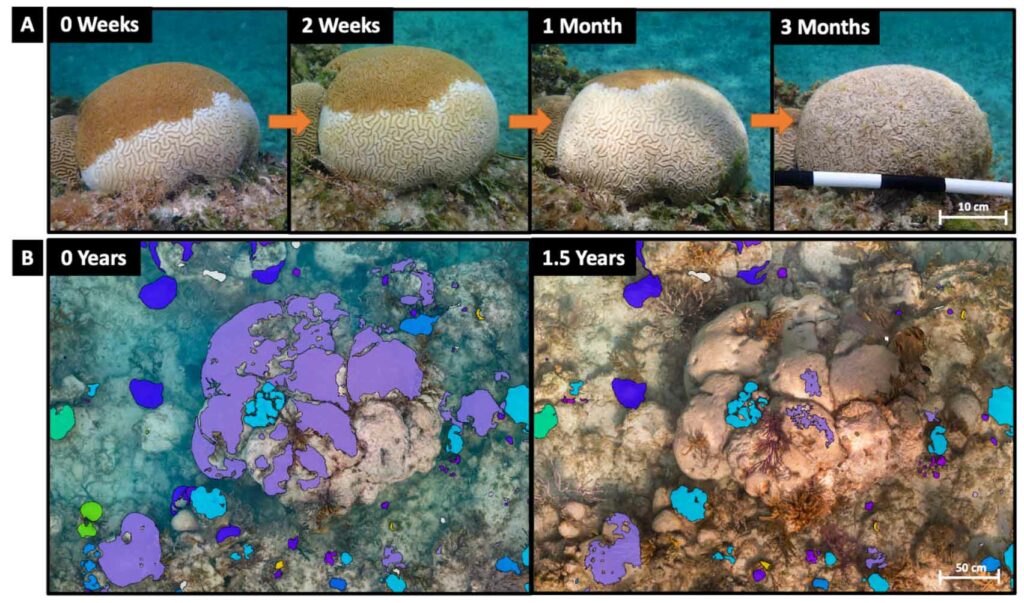
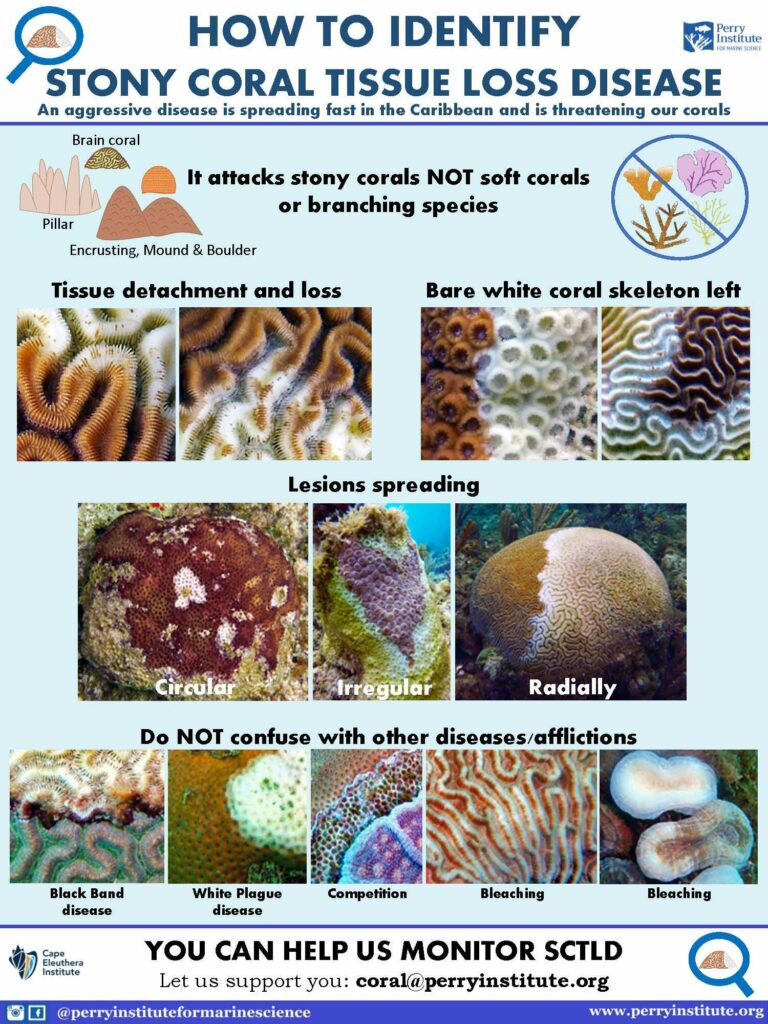
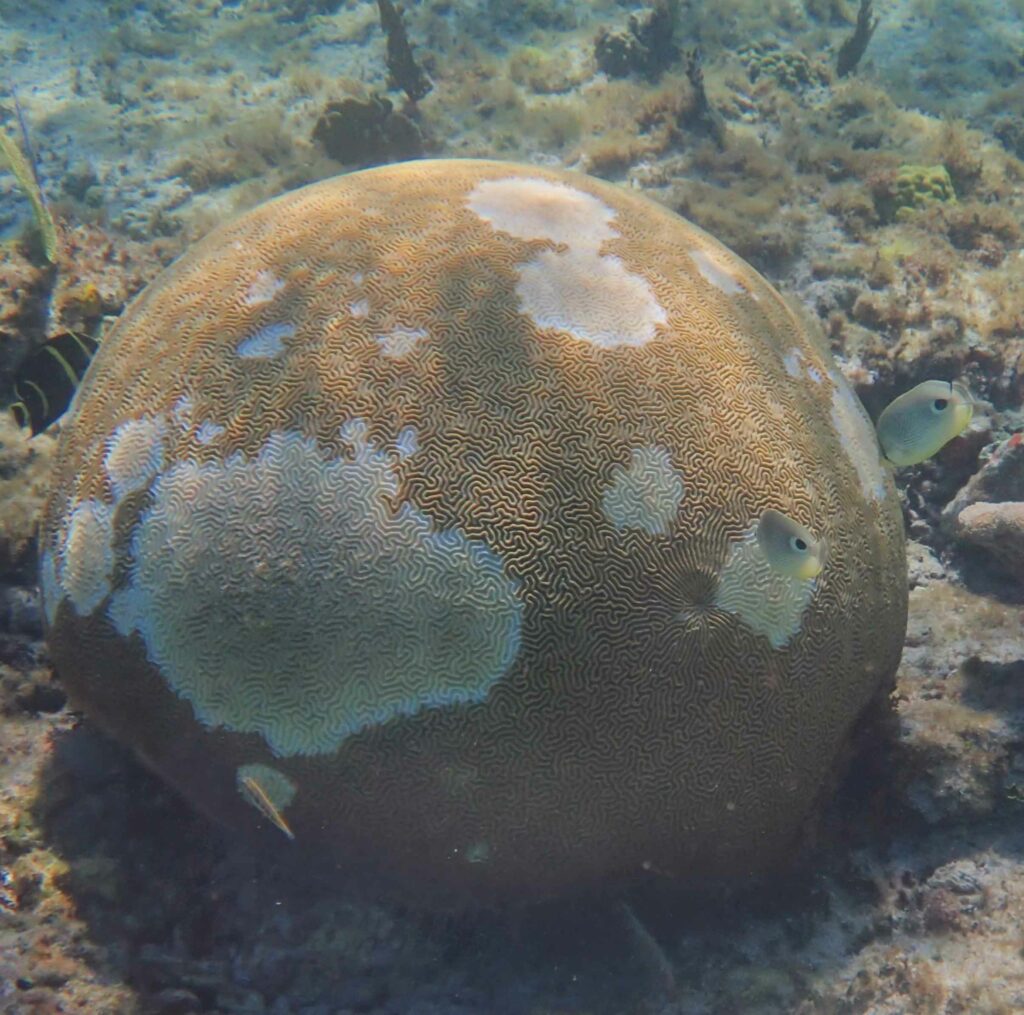
All boaters, divers, fishermen and ocean-lovers have a hand in stopping the spread of SCTLD. One of the most telltale signs of SCTLD is the presence of bone white coral skeleton directly adjacent to healthy, colored tissue. Bone white skeleton signifies an extremely rapid and recent death of previously healthy coral tissue, likely having occurred within the last couple of days. The presence of both living and recently dead tissue reveals an active infection, and lesions may spread radially, irregularly, or as multiple blotches within the same colony. After about a week, turf algae will begin to colonize the bone white skeleton, covering it with a brown-green hue.
A couple of other diseases and massive bleaching events have affected Caribbean corals in recent years, but none have been as contagious or lethal as SCTLD. It is important when to not confuse other diseases, predation, or bleaching with SCTLD. When it doubt, take a picture of the suspected disease coral so you can refer back to it later when you report sightings of the disease (see next section).