
Conservation is often about visibility; seeing the animals in our waters and, just as importantly, seeing the measures we take to protect them. From new educational infrastructure in Nassau to promising signs of population growth in Eleuthera, the data suggests that The Bahamas is becoming an increasingly vital sanctuary for the West Indian Manatee. We are moving beyond surprise at their presence and embracing a culture of stewardship for our new neighbors.
New Signage at Hurricane Hole: A Beacon for Boaters
As manatees expand their range into the busy waterways of New Providence, the intersection between marine life and maritime traffic becomes a focal point for our protection efforts. In September, we installed a dedicated educational manatee sign at the entrance to the Hurricane Hole Marina in Nassau Harbour.
This location was chosen with precision. Hurricane Hole is a high-traffic hub for large vessels and recreational yachts. By placing high-visibility signage here, we are providing a daily reminder to captains and crews to "Go Slow" and keep a sharp lookout. The presence of manatees in such a developed marina underscores their adaptability, but it also highlights their vulnerability to hull strikes and propeller injuries.
Spanish Wells: The Next Generation
The ultimate metric of conservation success is reproduction. This fall, an adult female manatee and her nursing calf we spotted in Spanish Wells, Eleuthera.
While the research team who spotted her was unable to confirm the specific identity of the adult from the photos provided—often determined by unique scar patterns on the paddle or back—the sighting itself is invaluable. The presence of a healthy, calm mother-calf pair indicates that the waters around Spanish Wells are providing the necessary quietude and resources for raising young.
This sighting aligns with regional trends monitored by the IUCN Red List, suggesting that the Bahamian manatee population is not just surviving, but actively growing.
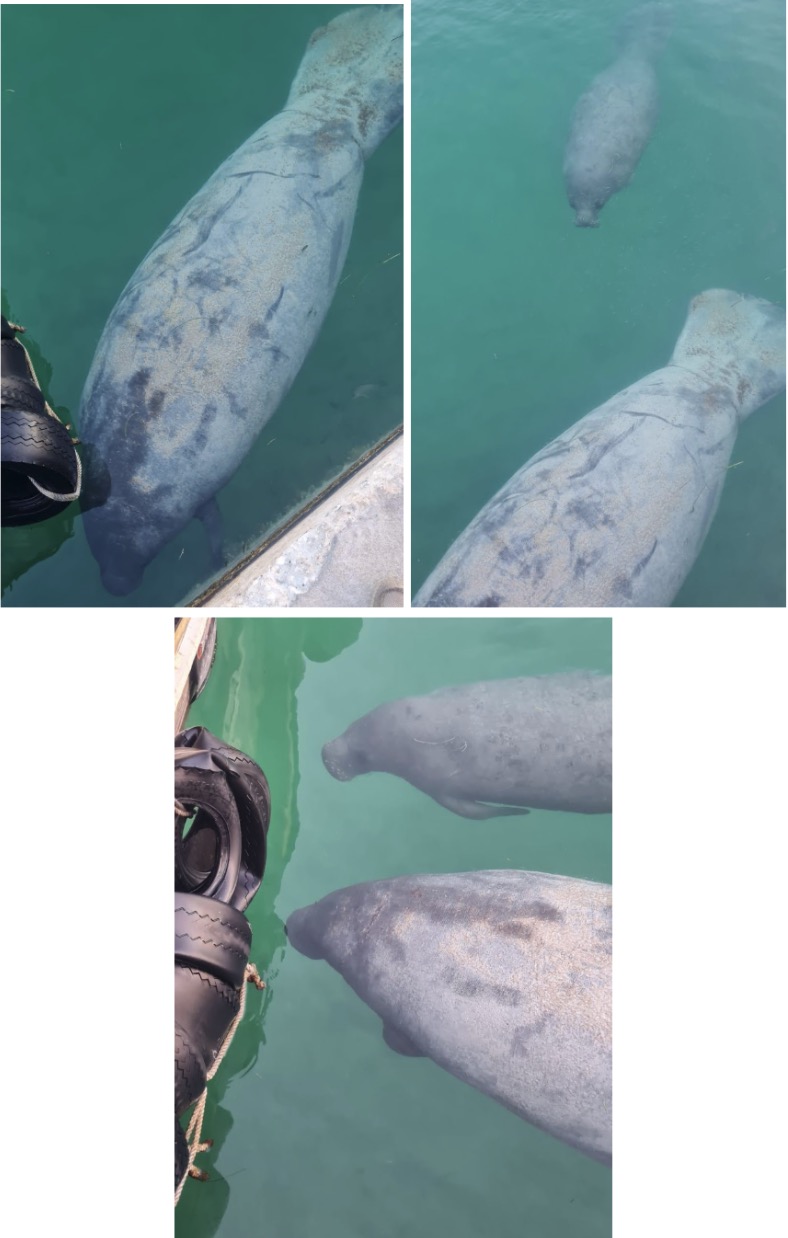
Mother-calf manatee pair seen in Spanish Wells, Eleuthera.
Montague Beach: Urban Grazing and Public Awareness
Closer to the capital, the natural and the urban collided in the best possible way. On Monday, September 29th, the BMMRO Deputy Director observed an adult manatee foraging for seagrass just off the Montague public dock.
This sighting offers critical ecological insights. The manatee was feeding on seagrass, confirming the importance of Nassau Harbour's vegetation. These seagrass beds are not just "manatee food"; they are vital "Blue Carbon" sinks and serve as nurseries for economically important species like conch and lobster. The manatee essentially acts as the gardener of the seagrass, maintaining the ecosystem's health.
Learn more about the ecosystem: Read about how we protect these habitats on our Coral Reef Resilience page.
Socially, the event revealed a significant opportunity for education. Conversations with beachgoers indicated that many were unaware manatees inhabited Bahamian waters at all. This chance encounter turned the beach into an impromptu classroom, proving that every sighting is a chance to build a constituency of guardians for our marine life.
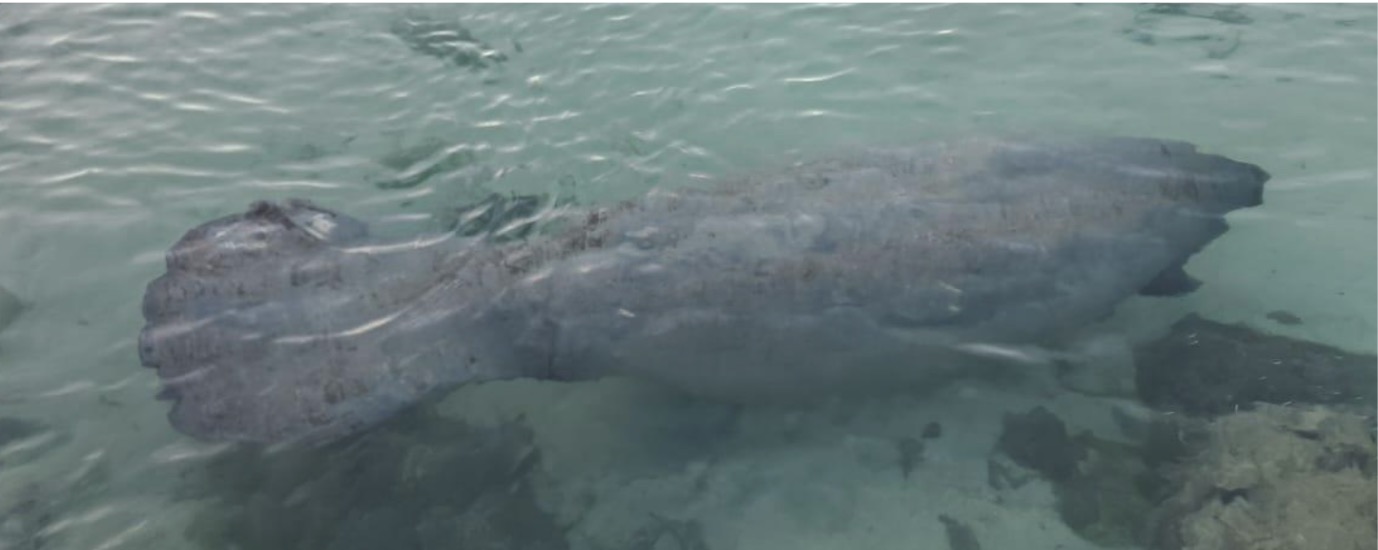
Adult manatee swimming along the dock.
These sightings rely on you, our community of citizen scientists. If you see a manatee, please take photos (focusing on the back and tail for identification) and report them immediately. Your eyes on the water are the most powerful tool we have.
Report a Sighting: Submit your photos directly to the Bahamas Marine Mammal Research Organisation (BMMRO).