
In the world of intensive coral farming, the "ugly phase" is the chaotic bridge between a sterile tank and a living ecosystem. As the nitrogen cycle kicks in, specialized bacteria begin converting toxic ammonia into nitrate, but this sudden surge of nutrients acts like fertilizer. The result is a biological explosion: brown diatoms and green hair algae rapidly coat every surface. While this looks like a disaster to the untrained eye, it is actually a vital sign that the invisible microbiome is maturing and preparing the water for its future inhabitants.
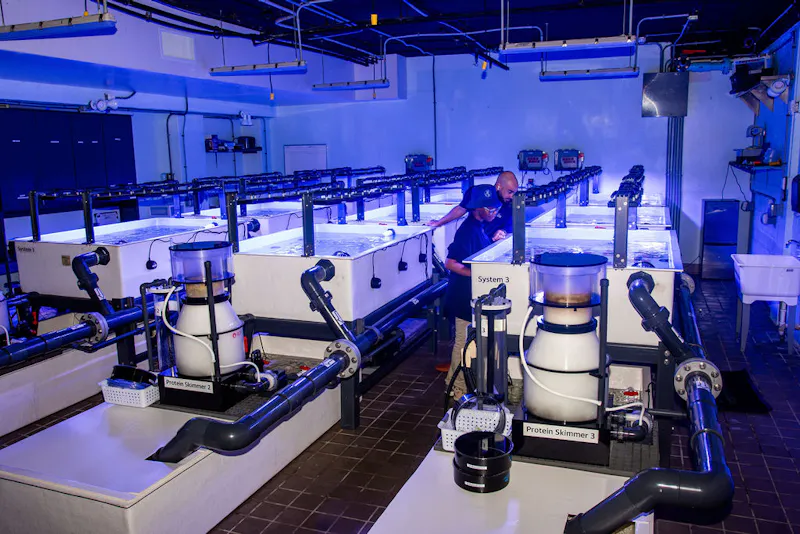
This messy transition is a race for dominance among microscopic life forms. The aquarist must wait for these algae blooms to peak and then naturally starve as the system reaches a chemical equilibrium. This waiting period ensures that the biofilter, the system's living engine, is strong enough to handle the waste produced by thousands of delicate corals. Only when the "ugly" growth begins to die back can the facility be trusted to provide the stable, clean environment necessary for sensitive species to survive and thrive.
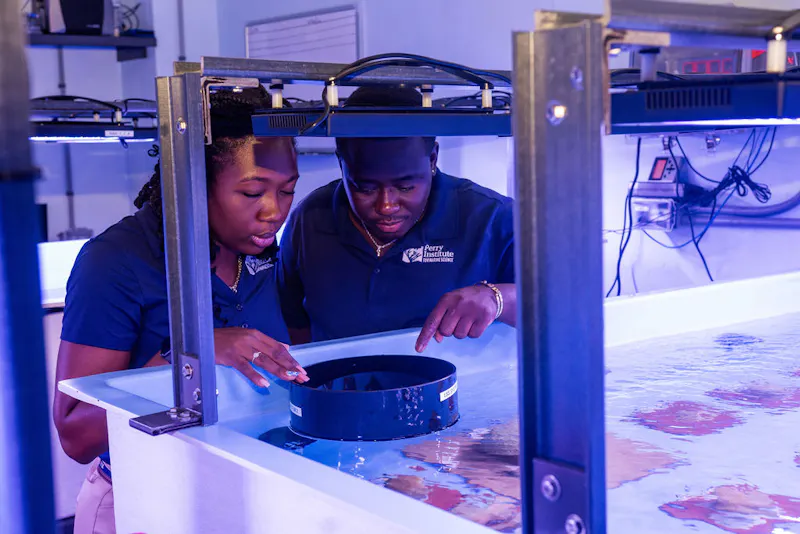
Transforming a chaotic, cycling tank into a pristine coral sanctuary demands both precision and patience. Our aquarists carefully monitor water quality using Hanna digital readers, colorimeters, and a HACH machine to confirm that ammonia and nitrites have been eliminated and that all other nutrient parameters fall within acceptable ranges. Once the chemical balance is verified and the biological engine is fully primed, a specialized cleanup crew of urchins and snails is introduced. These grazers methodically consume the remaining algae, ensuring the environment is polished and ready to welcome the first coral fragments.
The nitrogen cycle is well-documented in aquaculture and marine biology. For an accessible overview of how this process underpins healthy aquatic systems, the NOAA Ocean Service page on nutrient cycling offers a helpful primer.