
Stony Coral Tissue Loss Disease (SCTLD) is a devastating affliction that has been tearing through coral reefs across the region since it was first identified off the coast of Florida in 2014. It was first spotted in The Bahamas in 2019 and has quickly spread throughout the country since that time.
Nearly two dozen species of stony corals are susceptible, including foundational reef builders such as Orbicella annularis (boulder star coral), Montastraea cavernosa (great star coral), Colpophyllia natans (boulder brain coral), and Pseudodiploria strigosa (symmetrical brain coral). The disease progresses rapidly, killing coral tissue within weeks to months and leaving behind exposed skeletal structures. Its bacterial origin, made worse by environmental stressors like warming seas and water pollution, poses a significant challenge to reef conservation. Research published in Scientific Reports has confirmed that SCTLD can be transmitted through the water column rather than just through direct contact, which helps explain its rapid and far-reaching spread across the Caribbean.
This outbreak is unprecedented in scale and threatens not only biodiversity but also the livelihoods of communities that depend on reef ecosystems for coastal protection, fisheries, and tourism. The Perry Institute for Marine Science has been tracking SCTLD's spread across The Bahamas and leading conclave-style meetings to coordinate a national response with government ministries, conservation groups, and scientific partners.
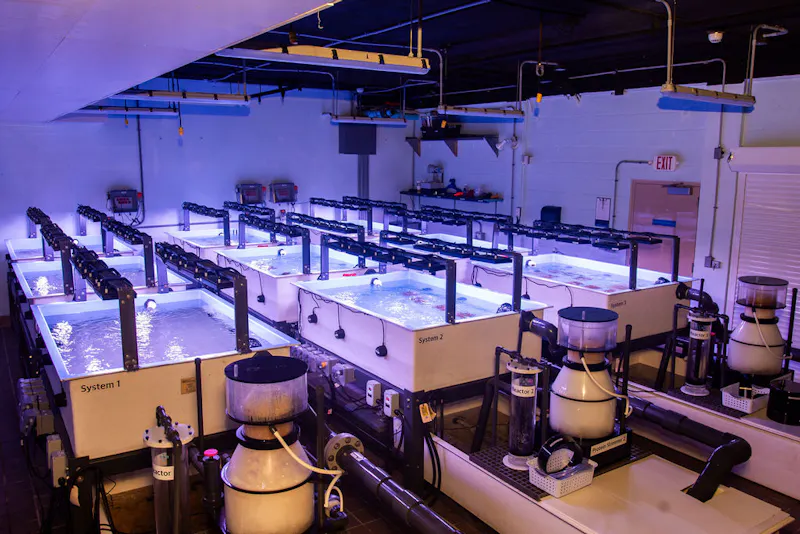
To combat this crisis, we have prioritized the preservation of SCTLD-susceptible coral species in our coral gene bank. This initiative safeguards species like Dendrogyra cylindrus (pillar coral), which play crucial roles in reef ecosystem structure and resilience and are being rapidly wiped out by SCTLD. The gene bank provides a controlled sanctuary, protecting these corals from the immediate threat of the disease while ensuring their genetic material is preserved for future restoration efforts.
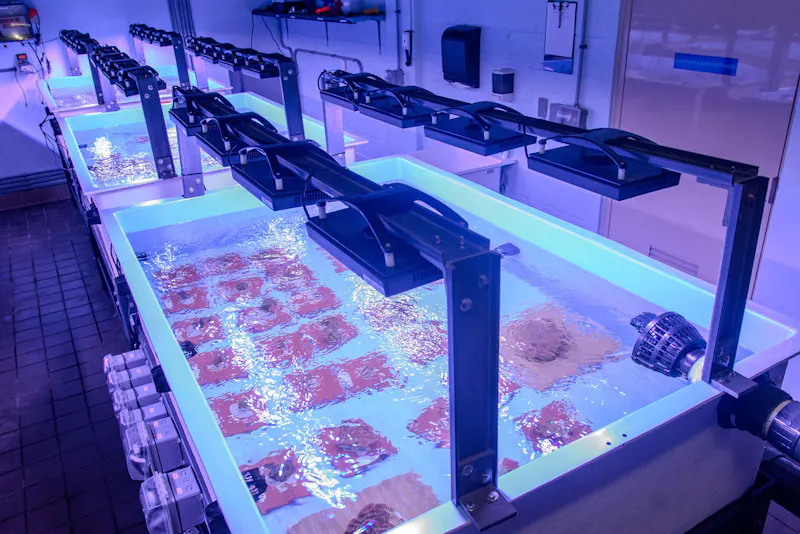
This living library will be essential for research into SCTLD resistance, breeding programs, and ecosystem restoration. By preserving these species, we aim to secure the legacy of coral reefs, maintaining their biodiversity and ecological function for generations to come.