Conservation is often pictured as a diver in the water or a scientist at a microscope. But as we face mounting climate challenges, saving our oceans requires a multidisciplinary approach. We need engineers, data analysts, and yes—architects.
This summer at The Bahamas Coral Gene Bank, we saw exactly what happens when different disciplines collide to solve a single problem: how to save more coral in less space. Through the lens of our summer intern, Kirkwood Farquharson, we are getting a glimpse into the future of reef restoration facilities.
The Challenge: Maximizing the "Ark"
The Coral Gene Bank is essentially a Noah’s Ark for Bahamian reefs, located at Atlantis, Paradise Island. It houses distinct genetic strains of corals, protecting them from Stony Coral Tissue Loss Disease (SCTLD) and bleaching events. However, maintaining these live banks is a spatial and hydrological puzzle.
Corals are aggressive neighbors; they need specific spacing to avoid stinging one another, yet they require precise water flow to feed and breathe. Expanding our capacity to hold more corals usually means building more expensive, space-consuming tanks.
The Intern’s Innovation: The Interlocking Tier System
Enter Kirkwood Farquharson. Combining a background in architecture with a passion for marine science, Kirkwood approached the Gene Bank not just as a biologist, but as a designer.
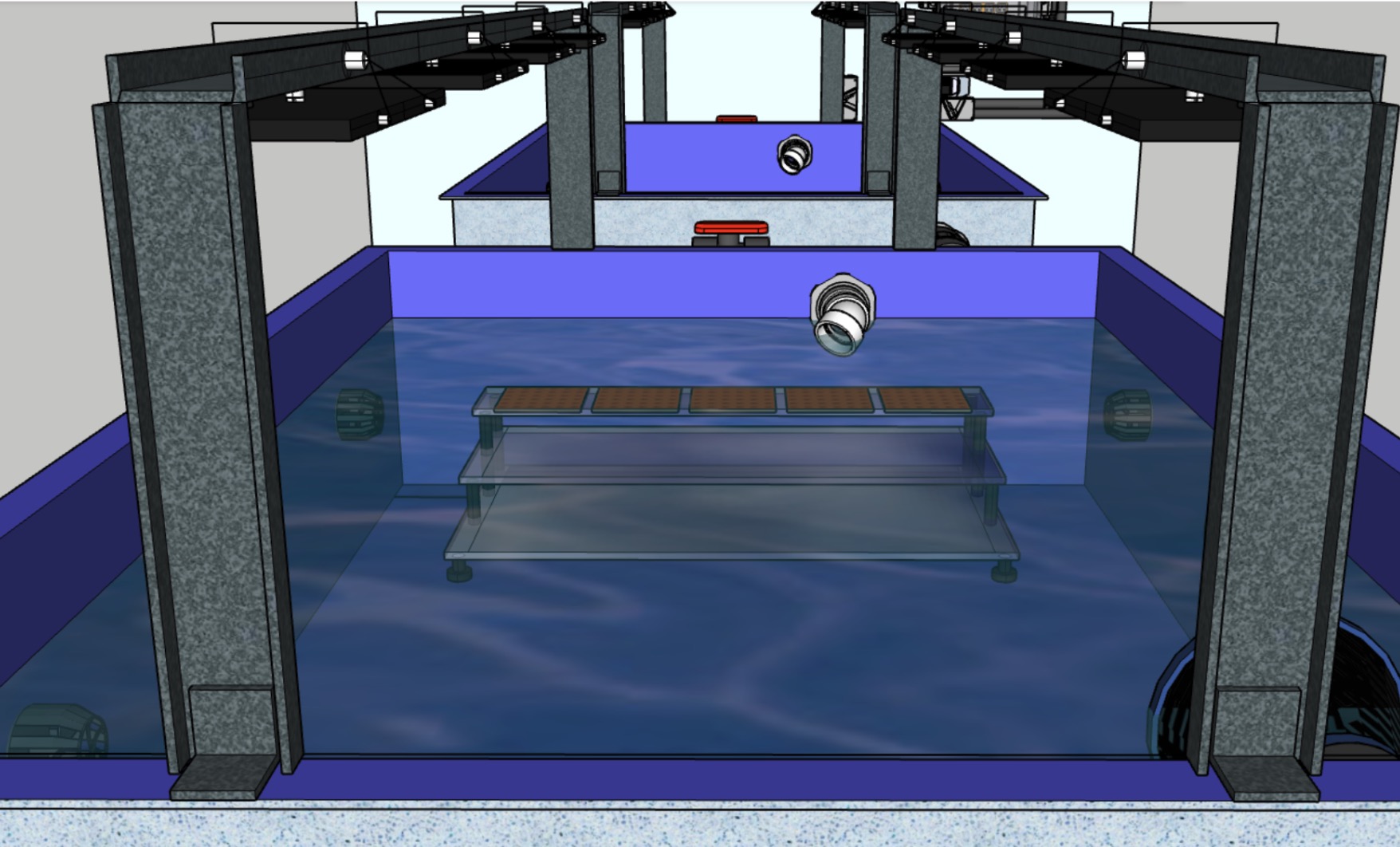
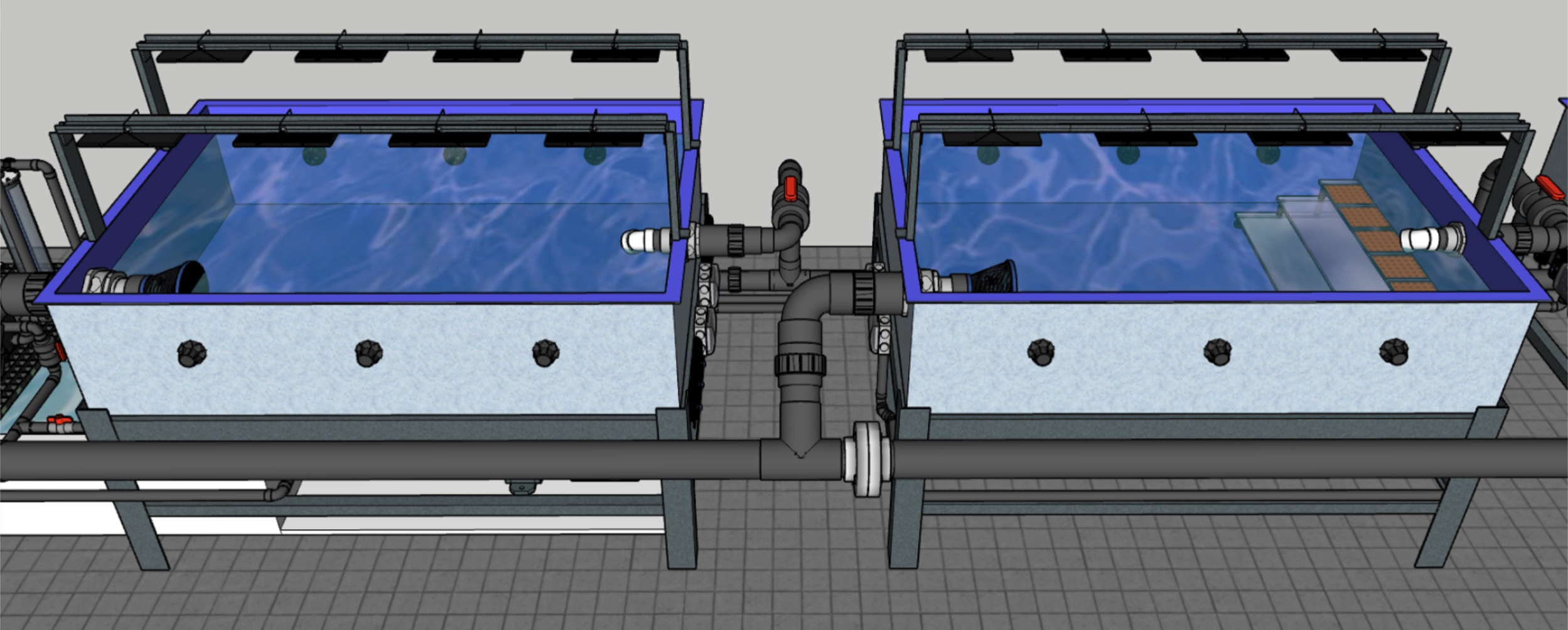
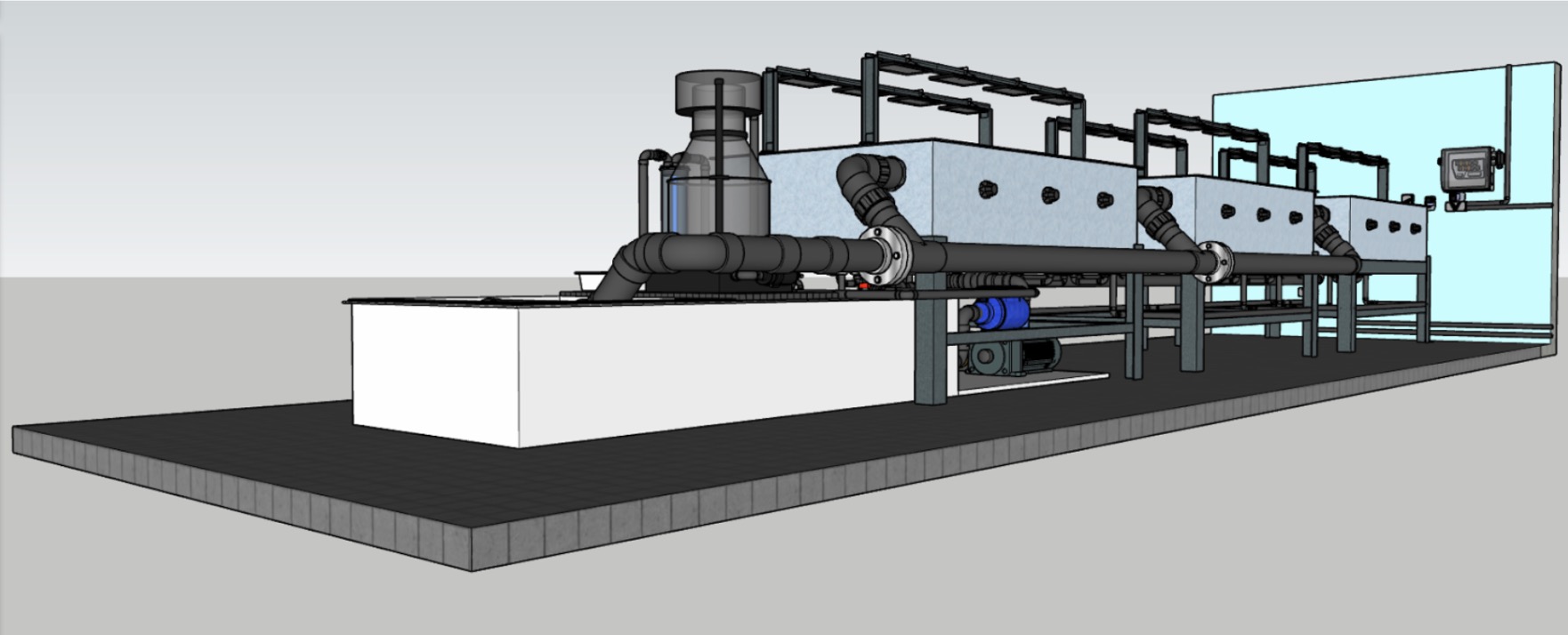
His first task was to create a digital 3D model of our existing aquarium tank systems to better understand our current limitations. But he didn’t stop at replication. He saw an opportunity for optimization.
Kirkwood introduced an innovative concept: a custom aquarium shelving structure.
The Design: He moved away from standard racking and designed a compact, interlocking tier system.
The Function: The structure is modular; simple to build, easy to move, and accessible for cleaning.
The Biology: Crucially, the design accounts for hydrodynamics. It ensures strong water flow reaches every tier, preventing "dead zones" where waste accumulates, while providing ample spacing so corals can grow without competing for resources.
Engineering the Next Generation
Kirkwood’s forward-thinking design does more than just look good on a screen; it opens the door to significantly increasing the capacity of our gene bank. By optimizing the vertical space within our tanks, we can safeguard more genetic varieties of coral without expanding our physical footprint.
This project serves as a powerful reminder that the next generation of Bahamian scientists is already reshaping the field. Kirkwood used an engineering mindset to imagine smarter ways to care for these vital reef-builders. It transforms the narrative of conservation from one of "maintenance" to one of "innovation."