
A Wake-Up Call from Science
In the world of marine biology, getting published in the journal Science is a career-defining milestone. It means the data is rigorous, the findings are globally significant, and the message is urgent.
This week, a groundbreaking new study co-authored by the Perry Institute for Marine Science’s Research Associate Maya Gomez and Executive Director, Dr. Craig Dahlgren, delivered a stark message to the world: Florida’s iconic staghorn (Acropora cervicornis) and elkhorn (Acropora palmata) corals are now functionally extinct.
The study, titled "Heat-driven functional extinction of Caribbean Acropora corals from Florida's Coral Reef," confirms that the record-breaking marine heatwave of 2023—where water temperatures soared above 32°C (90°F)—wiped out nearly 98% of these corals in the Florida Keys and Dry Tortugas.
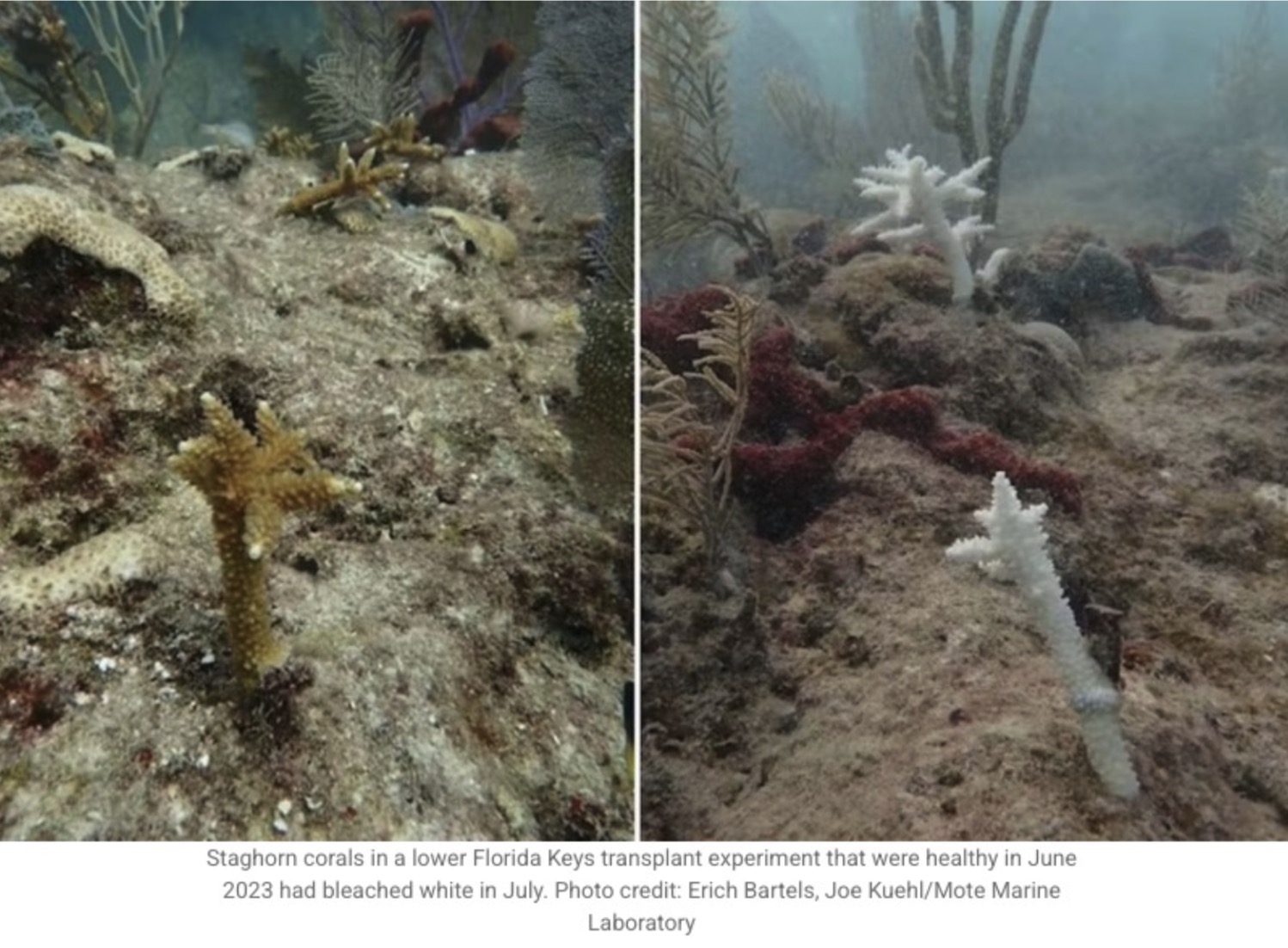
What Does "Functional Extinction" Actually Mean?
The term "extinct" usually summons images of dinosaurs; gone forever. "Functional extinction" is slightly different, but equally terrifying for an ecosystem.
Imagine a forest that used to have millions of trees, but now has only a handful scattered miles apart. Those few trees might still be alive, but they are too far apart to pollinate each other. They cannot produce seeds, they cannot regrow the forest, and they provide no shelter for birds.
That is the status of Florida’s Acropora corals. There are so few survivors left that they can no longer reproduce naturally or perform their critical job: building the 3D structures that protect coastlines from waves and provide homes for fish. They are the "living dead" of the reef.
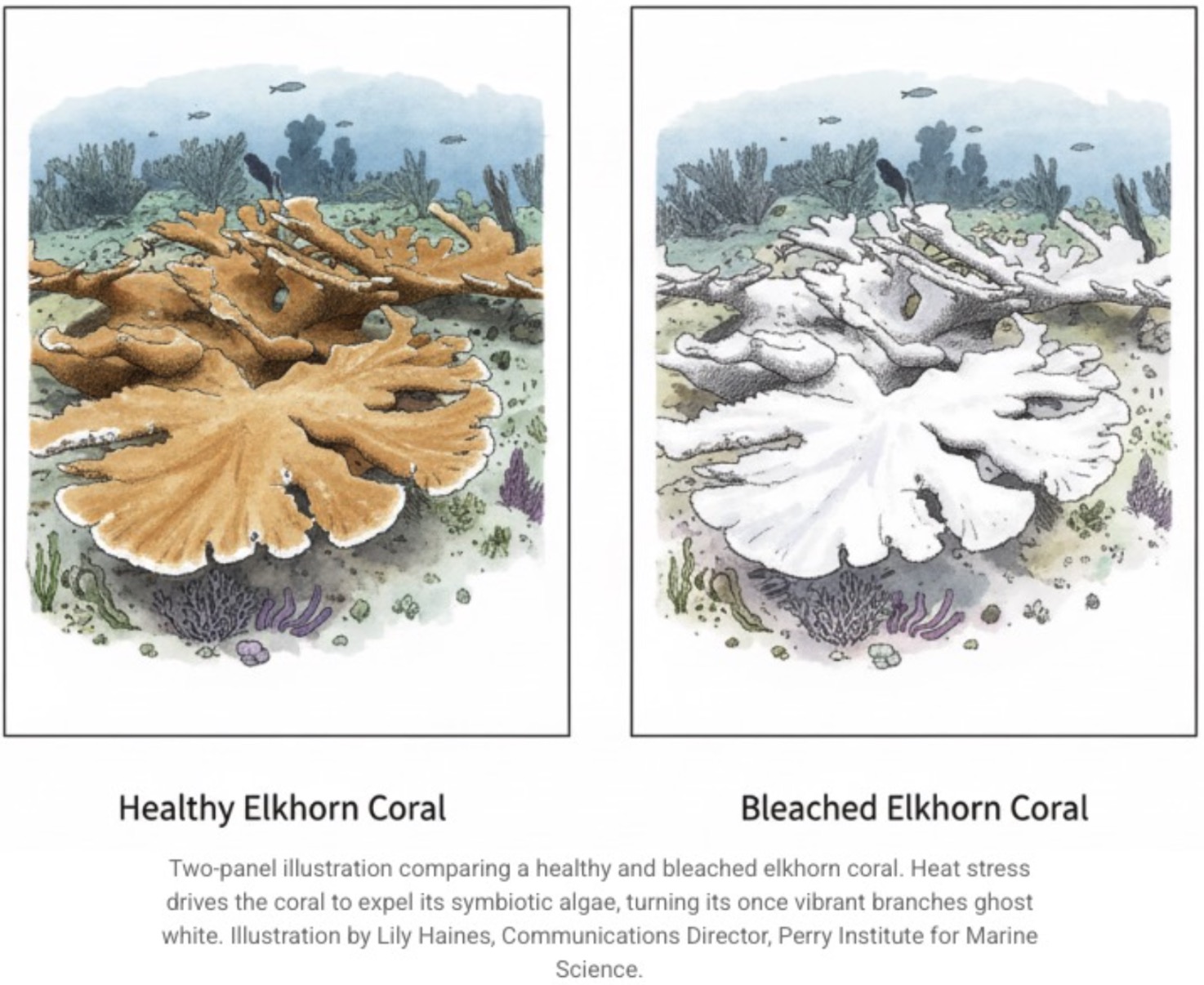
A Warning Shot Across the Stream
You might be asking: If this happened in Florida, why are we writing about it on the Atlantis Blue Project Foundation blog?
The answer is simple: The Bahamas is now the lifeboat.
Florida is our closest neighbor, just 50 miles or so away. The same ocean currents that connect our waters also connect our fates. However, the functional extinction of these species in Florida places a profound responsibility on The Bahamas. With Florida's populations collapsed, the Bahamian archipelago may now host some of the last, healthiest remaining stands of these critically endangered species in the Northern Caribbean.
Our reefs are not immune to heatwaves, but parts of The Bahamas benefit from deeper waters and stronger flushing currents that can create "thermal refuges.” These are pockets of cooler water where corals can survive when other areas cook. This makes protecting Bahamian reefs not just a local priority, but a global necessity.
The Science of Hope: PIMS in Action
This is where the doom and gloom ends, and the work begins. The study co-authored by PIMS researchers didn't just document death; it outlined the roadmap for resurrection.
Because natural reproduction is no longer possible in many places, science MUST step in. The strategies highlighted in the paper are exactly what ABPF is already funding and implementing here in The Bahamas:
Genetic Banking: As mentioned in our recent post about the Coral Gene Bank, we are bringing corals into biosecure tanks to protect their DNA from heat and disease.
Assisted Migration: We are identifying "super corals" that survived the 2023 heatwave and moving them to nurseries to propagate their heat-resistant genes.
Microfragmentation: By cutting corals into tiny pieces, we stimulate rapid growth, allowing us to replant reefs in years rather than decades.
We Can’t do it alone
The functional extinction of Florida’s reef-builders is a tragedy, but it is also a clarion call. It proves that we are out of time for passive conservation. We need aggressive, science-led and action-packed intervention. The Bahamas still has a chance to avoid Florida's fate, but only if we act now to keep our "lifeboat" afloat.
Read the full abstract in Science: Heat-driven functional extinction of Caribbean Acropora corals
Support the Science:https://www.perryinstitute.org/donate